Wednesday, September 21, 2011

Citation Conventions


Because this is an academic blog, most of the ideas expressed will not be our own.  Citing our sources is important in order to give the source credit where credit is due, as well as to give credibility to the paper and to gain the reader’s trust. Citations help distinguish between the writer and the source’s ideas. Also, plagiarizing is a very serious crime, and therefore, citations help to avoid legal complications.
In our blog, we will use MLA formatting to cite our sources so we will avoid academic plagiarism
This is the site that we will use to cite our sources using MLA format:
http://owl.english.purdue.edu/owl/section/2/11/
We chose MLA formatting for our blog because it is the most widely accepted form of citation.  It applies to a variety of sources, which is necessary for our blog posts.

Friday, September 16, 2011

 Man's Best "Friend"
     For the past ten years, one of the most heated and dividing issues among political and social spheres has been the issue of animal rights. While some think that testing and harming animals for the greater good of human beings is torture and should be considered animal cruelty, others think that it is a necessary evil in order to save human lives. Despite the controversy surrounding this issue, Mark Twain’s short story, “A Dog’s Tale” provides an interesting perspective on whether or not it is really acceptable to take the life of an animal to save that of a human. Through Twain’s interesting use of structure and point of view that shape his story, young readers are drawn in and able to relate to his central claim, that animals are not test subjects or play toys, yet living, loving creatures. 
     Twain introduces the reader to the main character, Aileen Mavourneen, a dog, at the beginning of the story, also describing her parents, a St. Bernard and a Collie. The story is told from the point of view of Aileen, which lets the reader sympathize with what she says. By allowing the reader see the story through Aileen’s eyes, instead of an outside observer or omniscient narrator, it gives the reader a chance to see what a dog might think about some of the things that humans do. In this story, Twain is showing the reader, through the eyes of a dog, why it is harmful when humans put their own lives above those of dogs. When the baby’s crib catches on fire, Aileen remembers what her mother told her and she risks her own safety to save the child. She does this almost instinctively and considers it her duty. However, when the scientist wants to experiment in order to save human lives, he does not think twice about killing Aileen’s puppy in the name of science. Aileen does not mind risking her own safety but she is obviously deeply saddened by the death of her beloved puppy. Twain raises an important question at this point; he forces the reader to ask whether it is okay to sacrifice an animal’s life in order to save our own. This is a question relevant to many people today, in this time of heated debate over animal rights. Twain is making the claim that animals are capable of love, communication, and other human qualities and that it is wrong to simply kill them in the name of science. Obviously this is a hard claim to support, however by presenting the emotional and saddening story of Aileen and her puppy lost to science, Twain gets his point across that humans should not just look at animals as inferior beings, but rather as companions. His claim can certainly relate to readers of all age. The issue raised in this story is current to many young readers because the issue is not outdated or unconnected from the questions raised today about whether animal’s lives are less valuable than humans.
     Although it may seem, after reading this story, that Twain is making a clear point against the harm of animals for the betterment of humans, Twain’s main claim is actually less clear. In the beginning of the story, Aileen’s mother tells Aileen to be brave and to think of others before herself. This is what Aileen’s mother says when the two are being separated, “but she comforted me as well as she could, and said we were sent into this world for a wise and good purpose, and must do our duties without repining, take our life as we might find it, live it for the best good of others, and never mind about the results; they were not our affair. She said men who did like this would have a noble and beautiful reward by-and-by in another world, and although we animals would not go there, to do well and right without reward would give to our brief lives a worthiness and dignity which in itself would be a reward.” This quote from Aileen’s mother brings an interesting perspective into the story. Aileen’s mother is essentially telling her that although there will be no reward waiting for her in heaven, that Aileen should still live her life for the good of others. Is Aileen’s mother telling Aileen that her life is less important than that of a human? The question about whose life is more important, the dog’s life, or the human’s life that the scientist is supposedly saving by killing Aileen’s puppy, is a question that is certainly still a relevant issue. Young readers can take an interest in this story because it closely relates to one of the most heated debates today. Even Twain did not take a clear side on the issue, but yet left it up to the reader to decide which would have been best, possibly letting humans die or killing Aileen’s precious puppy. 
     Although Twain never clearly states his main claim anywhere in the story, it is quite easy to interpret what Twain is alluding to throughout the story. The structure of this story is quite important in identifying the theme. Twain spends the first third of the story talking about Aileen and her mother. Aileen’s mother is described by Aileen to be very intelligent, as she is always listening to what humans are saying and repeating the words back to her fellow dogs to make them ponder how she got such a large vocabulary. By starting off the story describing the relationship between Aileen and her mother, Twain convinces the reader that these dogs really do have human qualities, that they are intelligent, and that they do love each other. Later on in the story when Aileen has her puppy, the reader understands the love that Aileen has for her puppy is real because Twain showed the love that Aileen and her mother had for each other. When the scientist kills the puppy for testing purposes later in the story, he becomes the antagonist since the reader has already become connected with Aileen earlier in the story. In this way, Twain makes his point clear without ever clearly stating his claim. He does this through the use of structure and point of view. 
    This story of Aileen and her puppy strikes a chord with readers of a generation who were brought up during a time when animal rights are on the forefront of hot topics. Many people today only see the human perspective of the issue, however Twain gives us an animal’s perspective by introducing us to Aileen, who has some human qualities and is not just “another animal.” Aileen’s story certainly applies to today’s young readers because it makes one question whether or not it is moral to place ourselves over animals. 

Exploring the World of Men

“A Society” by Virginia Woolf 

          In “A Society” by Virginia Woolf, a group of women decides to create a society in which women try to enter the world of men. One of their reasons for doing this is, “"Why if men write such rubbish as this, should our mothers have wasted their youth in bringing them into the world?"” Woolf intended for this story to be a satire; she uses a lofty, silly rhetoric to make fun of what most people think women talk like while weaving in humor with a serious question: if literature can actually be appreciated by most audiences. Since this story is a satire, all of these universal topics are open to interpretation. For example, it does raise other similar questions such as, “How much of our young lives are we willing to use for a different cause?” or “Are our lives intended to help other people?” This short story is relevant to young readers because of the universal personalities of the characters, current theme of feminism, and the humorous rhetoric used by Woolf. 
          The characters are also very relatable to the modern audience. Most of the main characters are young, unmarried women but their personalities are universal. Poll, is the likely old maid of the group. She is described as “not a beauty” and “quite queer”. In the teenage world of cliques, there are always outsiders. Castalia, is the first girl to break the promise the girls make to each other: to not have a baby until the society reaches their final conclusion about men. Once again, in every clique there is always going to be one rule breaker. Clorinda is the leader of the group. She was the first to suggest the idea of the society as well as the promise they all make to each other. Every clique of teenagers has these three personality types: the rebel, the odd one out and the boss. Since the personalities of all the characters are so broad, it is easy for a youthful audience to be able to see these people in their everyday lives. Through the comprehensive characters, Woolf has managed to link her story with the lives of a contemporary audience. 
          Many people may argue that this is a feminist short story, especially since it was set in 1914. Although the feminist arguments are outdated I think the theme of feminism as well as seeking out the truth are still general themes for young adult readers. These women are very independent of their men. They try to figure things out for themselves, something college students are greatly encouraged to do in class. Secretly integrating into man’s society, the women try to find out whether it is a productive use to the world to bear “as many children as they should” as they were taught to by their previous generation of women. This theme of feminism is also another notion that many college students are still fighting for: equal pay, equal number of men and women in certain jobs etc. While reading this story, the audience can connect these themes with things they see in the newspaper or their everyday lives. 
          A lot of the jokes in this short story are still topical, especially for college students. Woolf spares no one in this short story and makes fun of anything she can. She made fun of poetry by calling it “verbose, sentimental foolery”. She also pokes at trials that are so boring that one of the women fell asleep during it while she was supposed to take notes. Woolf also makes fun at the foolishness of all the women especially when Poll exasperated at her father’s request to read an entire library exclaims, “Why, why did my father teach me how to read?” The foolishness of the characters can be so unreliable that it is humorous. Through the rhetoric, characters, themes and jokes, Woolf is able to connect with the modern young reader and succeeds in this witty, modern short story.
Journeying Through the Teenage Heart

           Throughout the centuries, romance stories remain the most penned genre in Western literary history, but they are also the least varied in overall structure. Generally, a male will meet a female and they will fall in love, and after a few obstacles, remain in love. However, the acclaimed Russian author Anton Chekhov breaks through the familiar romantic mold to create a completely original plot line in his short story, “The Beauties.” In this poignant tale of young love, the teenage male narrator cannot help but praise the attractive appearance of two separate women, yet he does so not through verbalization, but observation. Therefore, through the use of characterization and symbols, Chekhov’s short story “The Beauties” creates a universal situation that addresses the anguish of attraction, in which young readers from across the globe are able to relate.  

             Curiously, Chekhov reveals little information about the narrator, though not without a purpose. Since the narrator remains nameless, this lack of identification provides the reader the opportunity to place his or herself in the situation and personalize this story as if it were his or her own. In addition, the development of the narrator’s personality occurs not through his actions or dialogue, but through his thoughts, especially regarding beautiful women, whom he notices in great detail. For example, upon first glance at a teenage Armenian girl, he felt “all at once as though a wind were blowing over my soul and blowing away all the impressions of the day.” From this single quotation, much is revealed about the narrator: his romantic disposition, sentimental nature, and poetical spirit. And yet, despite these strong feelings, he fails to act upon them, never even speaking to the source of his glorious praise, thus revealing a meek side to his personality. Moreover, this teenage beauty strikes his heart in a peculiar way - by causing “a sadness vague and undefined as a dream.” Thus, the author feels unworthy of her love and attention, and by keeping his true feelings hidden from the woman for which he feels such strong emotions, he is left to rot in his own dejection. Though the feeling of being bombarded by a great beauty is one which is quite specific, the reader is able to connect with the narrator and internalize every feeling described, showing Chekhov's skill as a story-teller.

          These emotions felt so vigorously by the narrator are documented throughout the short story with the use of symbolism. Four symbols occur throughout the text: birds, the sun, whips/bells, and guards. The narrator compares both women to a bird; they are beautiful to watch, yet unattainable. This, in turn, creates a sense of despondency not only in the author, but in all those around because the girls never take any notice of such flattering attention and merely flutter away. The sun stays connected to this concept of physical attractiveness because “every one of them thinks it terribly beautiful, but no one knows or can say in what its beauty lies.” Furthermore, the sun gains prominence by becoming the focal point of the setting wherever a gorgeous girl awaits to be noticed. Before the Armenian girl appears, the narrator feels “the burning sun beating on them,” and before the boy encounters the beautiful girl at the train station, he notices that “the sun had not yet quite vanished.” And just like a sunset, the beauty of a girl cannot be everlasting. As if the continual sun is not enough foreshadowing of the sights to be held by the youthful boy, then horse whips and station bells also serve that purpose. In the Armenian village, a Little Russian cracks a whip on his horses while the narrator stares in admiration of the young girl. Similarly, at the train station, after spotting the attractive young girl, bells sound as if to call the narrator into action before the chance is lost forever. A guard also appears at the train station, but for an opposite purpose. Just as his title suggests, this man is the protector of the narrator’s heart, discouraging his love by noting that to be in love with such a pretty girl would be a “‘calamity.”’ These symbols collectively compile contrasting feelings of confusion when one is attracted to another. Should one take a risk and talk to the other, or keep hold of the heart’s emotions inside because the other is impossible to attract?

           Together, the symbols and characterization help to establish the theme into one of appreciating beauty, but also acting on these feelings of attraction. Perhaps the greatest lesson to learn from Chekhov’s “The Beauties,” is that beauty can be found anywhere and everywhere, whether in a small village or on a train station, and one must learn to verbalize his or her emotions in order to avoid later sadness. Of course, the amount of hesitation one feels is determined by one’s personality. So, if someone is particularly extroverted, then he or she may have no problem conveying emotions to another. Yet even if one opts not to speak of such vulnerability, no one can escape the intense powers of attraction, or the incredible pull of love. It empowers, scares, and alters everything about one’s life, just as the narrator and so many young adults have experienced. "The Beauties" describes the passion of youthful infatuation, yet also shows the reality of how difficult it is to communicate this feeling with others. This will never change, no matter what the century or culture, making Chekhov’s “The Beauties” a timeless classic that any young adult would enjoy.

Traveling with Imagination through a Story Past


From the beginning A Green Satin Gown by Laura Richards is easily relatable to today’s youth.  The story begins in present time, but is quickly whisked back in time as an elder shares a story of her past with a seventeen year old girl.  The relationship between the older generation and the younger is vital and often consists of the exchanging of stories from times long ago.  Almost all of today’s youth can remember an experience where they were told stories of a friend or family member past.  A Green Satin Gown is linked to modern youth due to the relatable connection that is established between the younger narrator and the older Madam Le Baron, the imaginative story-telling format, the mystery surrounding Madam Le Baron and use of sensory details that bring the story to life.


The story-telling format of the writing transports the reader into a different time and place.  This incorporates a great deal of imagination, which is deeply rooted in youth.  A youthful person has a mind that is mostly untainted by the realities of society, which allows for a great amount of creativity and imagination that can be associated with traveling through a story.  In addition the narrator says, “I had walked into a fairy tale, or else I was dreaming!”  This imagery of a fairy tale most youth can instantly connect with, through their own personal experiences of the imagination.  

Younger individuals often perceive adults as mysterious and as if they are in a whole different world.  The young girl and Miss Persis gaze at the house of Madam Le Baron everyday and the girl even imagines what Madam Le Baron looks like, “[she] could not help picturing to [her]self the great lady as about six feet tall, clad in purple velvet, and waving a peacock-feather fan”. One day Madam Le Baron has Miss Persis come pick up the young girl, but she doesn’t tell her why she needs her and appears to be a very secretive person.  Madam Le Baron lives in a beautiful mansion with maids, which further exaggerates the contrast between her and the young girl.  Adolescent readers are able to relate to the feelings surrounding the contrasting world of adults.  

Throughout the story specific sensory details that youth can attach to are repeated.  Phrases such as, “breathless”, “pink with excitement”, “cool, dimly lighted parlor”, and “there was a soft rustle, a smell of sandal-wood in the air” all include observations from sight, hearing, smelling and touching that youth often use to identify their own experiences.  For youthful individuals many experiences are new, and a reaction to this is to take in all of the small details in order to encompass the full vision and experience that is being encountered.  The authors use of these sensory details make the story directly relatable and understandable to modern young adults.

A Green Satin Gown is a story that youth living in the modern world can relate to due to the link between older and younger, story-telling format, the mystery built up around Madame Le Baron, and the sensory details used throughout the story.  The link between the teller of the story and the younger girl is a relationship that most youth can relate to.  The story transports the reader into a different world, which is easy for an imaginative youth to understand and follow.  The mystery built up about Madame Le Baron sparks curiosity that adolescence often feel concerning adult figures in their lives.  The repetition of sensory details pulls adolescent readers into the story and suddenly their imaginations transport them into another world.

New Beginnings


Beginning something new can be such an exciting feeling, but it can also be scary. Embarking on an adventure alone can be one of the most life-changing experiences. This feeling is one that almost all college freshmen are going through right now. The thought of a heavy course load, a roommate, a dorm, strange new faces, and a completely different lifestyle can seem daunting. On the other hand, these are all exciting elements of the college experience that once acclimated to, will be the best four years of our lives. Similarly, the protagonist, Everett, of A Question of Latitude, sets out alone to see the Congo and maybe even reform their people in the process. He plans to write a story about the people of the Congo, thinking that they will be accepting of his white presence, that they are a mundane group of people. He is quite culture shocked when he comes to find that the Congo is anything but mundane and accepting. He learns that these people are violent, enigmatic, and even cannibalistic. Upon entering the Congo, Everett feels excitement as well as uncertainty, for he knows nothing of what lies ahead. College freshman can relate to these same feelings, for while the Congo and college are two separate places, both are foreign and new in the same way. Both A Question of Latitude and freshman year are related in the ways that they see, approach, and adapt to a new environment, regardless of how different the environments may be.

            Everett and college students are the same in the way they approach new experiences. Both are overtaken by nerves and excitement. It is easy to compare these points of view, for both Everett and the college freshman are taking on adventure alone in a mass of strangers. They are nervous about the unexpected that lies ahead; likewise, they are excited by the unexpected that lies ahead. The thought of a fresh beginning is what fuels both characters to embark on their new adventure.
Everett enters the Congo naïve to the workings of this African culture. He is now independent and has one chance to make an impression. However, right from the beginning, he quickly realizes that his highbrow credentials that were substantial in the United States have no face value in this society. He is shocked to hear of the Congo’s cannibalistic tendencies, yet thinks he can undertake the position of reforming these people. Everett’s initial tone indicates just how naïve he is, and here, the reader can see that Everett is headed for more than he may have anticipated. It is easy for an outsider to analyze this situation, but for Everett, he sees this new culture as an opportunity for a new start, rather than the bizarre culture in front of him. College students do not enter a new university thinking that they can change the world, but we do come into the first year with a high school senior mentality or tone that quickly vanishes. New college students are also naïve to the lecture-style classes, laundry, setting our own schedule, making a whole new set of friends, keeping our dorm room clean, etc. This list continues for the numerous responsibilities that college students must undertake. We are used to knowing everything expected of us, and we are used to our familiar surroundings, as is Everett, whose first word to describe the Congo is “strange.” He witnesses the violence between blacks and whites firsthand, as well as the nonchalance toward such atrocities; he cannot comprehend why no one does anything to stop it. College students are also amazed by such aspects of college life. New environments excite and scare the outsiders experiencing them, but it is how one takes on this challenge of the unknown that affects the gains from the journey.
Adaptation is tricky, for it can require abandoning all previous belief to conform to something new. Everett acclimates to the harsher climate of the Congo. He reflects back to how he would have handled these situations at home. Instead of dialing 911 at a murder scene, he looks right through. He even engages in some of the violence himself, although he feels great shame. He constantly seems to be making life or death decisions, something he was not accustomed to in the United States. The college experience requires students to adjust to living on one’s own independently, which is harder for some. It takes months, even a semester, to get used to this new life. Just as Everett chose to look away from things he did not want to see in order to tolerate life in the Congo, college students give up certain comforts associated with home to get a college education.
The problem with adaptation is that it may or may not be beneficial in the end. It can create change for better or worse. In the case of Everett, he respects that he abandoned his previous morals to survive in the Congo. He makes the point that he has not forgotten these principles, but that he has put them aside for the time being. He acclimates to the lifestyle of living just to see to the next day. College forces adaptation on students. In most cases, college matures students and brings them into the real world, but there are times when college can send young adults down the wrong path. In this way, adaptation is all about how the specific person changes. Everett venturing out into the Congo can be compared with that of a college student’s first semester because they are both in new environments that will become familiar. Both instances stimulate nervous and thrilling emotions, yet it is hard to still feel comfortable and at ease. Any kind of adaptation to new surroundings follows this sequence, but the main goal is that one day soon the unfamiliar will become the familiar by gaining experience and knowledge along the way.

Friday, September 2, 2011

Introduction

“Twenty years from now you will be more disappointed by the things you didn’t do than by the ones you did do. So throw off the bowlines, sail away from the safe harbor. Catch the trade winds in your sails. Explore. Dream. Discover.” – Mark Twain
This blog is written by college students at UNC-Chapel Hill in order to expose readers who are fascinated by foreign cultures to the eclectic customs and backgrounds of diverse regions. Through the mediums of literature, history and art, we will explore and discuss different cultures by means of various anecdotes, important events in history and masterpieces of art, in order to achieve a deeper understanding of different cultures. Through our personal experiences and other unique perspectives, we have created this blog to be a resource for people interested in traveling and experiencing new exciting places. ¡Vamos!

I’m Hannah Hollon. I am an out of state student at Chapel Hill from Charleston, SC. I am currently a Public Health Nutrition major, and one day I plan on becoming a doctor; my main interest is cardiology. Among interests, my favorite is traveling. I have experienced many different kinds of travel, but some of my favorites were in Greece, France, and Turkey. I have been on two different service trips to Honduras through Water Missions and Nicaragua through Orphanage Outreach. My recent travels were to Italy and the Netherlands this past summer with friends. We spent many days exploring Amsterdam and relaxing on the Italian beaches. Some of my other passions include running, laughing, cooking, and anything to do with music. I hope to study a semester abroad during my time at UNC; I would really like to see India or even South Africa.

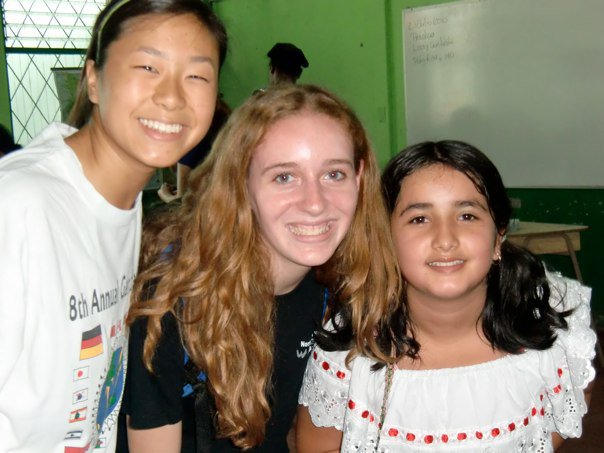
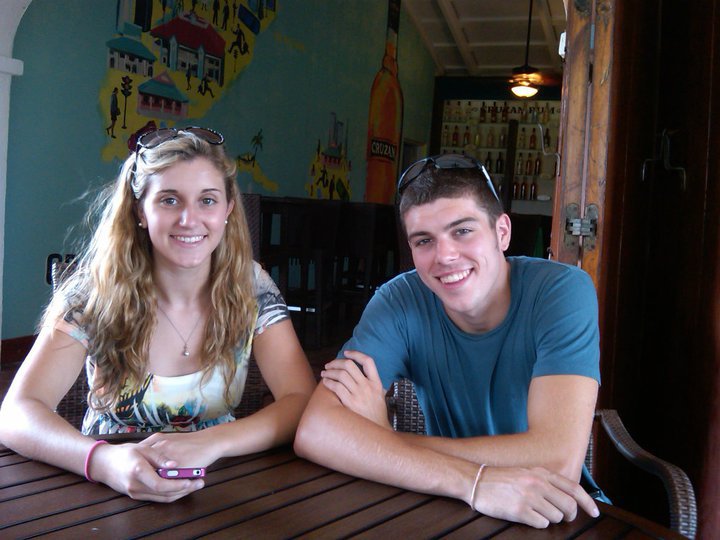
Hi! I’m Sarah McCauley, I was born in San Francisco California, but I have lived in Atlanta Georgia for most of my life. I attend the University of North Carolina at Chapel Hill where I am currently undecided as far as majors go. I am interested in Business and Medicine, so I hope to fuse these interests into a major and eventually a career path. I am passionate about traveling, and I have been fortunate to go out of the country twice. My first time out of the country was to Costa Rica with my Girl Scout troop, where I worked in the local schools and with the carbon offset program. The rich culture of this lush country truly intrigued me and made me want to explore other cultures. My second time out of the country was to Bermuda, this summer! I hope that my future holds many great travel and cultural
experiences.

Hi, I am Chris Martin, and I am a currently a first-year student at the University of North Carolina at Chapel Hill. I have lived just outside of Durham, North Carolina my whole life. Before attending UNC-CH, I attended elementary school and middle school in Hillsborough North Carolina and then attended Orange High school, also in Hillsborough. I am an undecided major but plan on doing something with either business or public health. Traveling and exploring new areas is one of my absolute favorite things to do. I have been fortunate enough to travel extensively throughout the US, as well as traveling to Canada and the Virgin Islands. Last year I also went on an educational trip to Italy, Sicily, and Greece as part of the People to People program. I hope to put my travel experiences to use with our blog about how traveling abroad can immerse students in the cultures of other countries.

Hey! I’m Bridie McDonough! In the spring of 2011, I happily graduated from Leesville Road High School in Raleigh, NC. Currently, I am a first year at the University of North Carolina at Chapel Hill. Perhaps as a result of my undecided major, I show a wide array of interests, but I especially love to learn about different cultures and customs from around the world. Although I have never left the time zone, I am a travel enthusiast and plan to take full advantage of the study abroad programs while in college. In spite of my lack of travel experience, I still consider myself knowledgeable of other countries and cultures through the books that I read. And I don’t let my limited opportunities stop me from traveling, for I think of life as a constant journey since there are always new surroundings to exp

Hi! I’m Lori. I’m from this little suburb outside of Raleigh so I’ve always been interested in travel. I hope to major in Business and to learn as many languages as I can while in college. This past summer I went to China to visit my grandparents as well as to tour Shanghai, Beijing and Hong Kong. The experience was an eye-opener for this gal who’s lived in the suburbs all her life. I mean, it was the first time I ever rode a subway. For this blog, I hope to give the POV of a girl who hasn’t had that much study abroad experience, but who plans to in the future. As a freshman at UNC, I am planning on studying abroad in England (because they speak English) by my Junior year. And some random facts about me: I play tennis, I take pictures and I want a teacup pig as a pet when I get my own apartment.